
Gender biases at work are also transferred to Artificial Intelligence -What an experiment with two AI agents showed
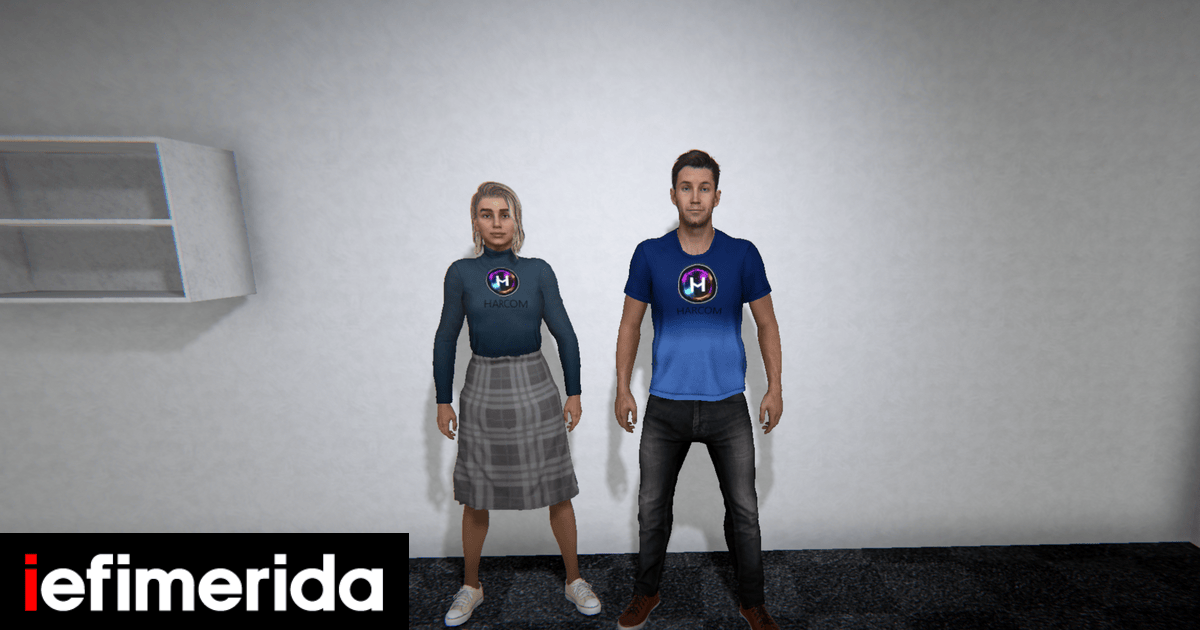
Two anthropomorphic AI agents, Johan with male characteristics and the female version of Johanna, worked with employees in a virtual office environment. When it was time to receive a reward for…
⏱ 4 min read
Two anthropomorphic AI agents, Johan with male characteristics and the female version of Johanna, worked with employees in a virtual environment equipment
When it came time to get paid for their work, johan got more money from Johanna, even though they were both based on the same technology and possessed the same capabilities. The above incident shows that gender biases encountered in the workplace can also be replicated in interaction with Artificial Intelligence.
ARTICLE CONTINUES AFTER ADVERTISEMENT
Artificial Intelligence for the Workplace
This was the result of research led by the University of Limerick in Ireland. The researchers wanted to examine whether the way in which they presented the Artificial Intelligence agents (AI agents) influences how people behave in a work environment.
The researchers placed 189 employees in a virtual office environment and asked them to do work activities working with two different AI assistants: johan and Johanna.
Participants were then given real money and asked to share it with the AI assistant as a reward for completing the tasks. Through a real transaction the researchers looked at how much money people were willing to pay Artificial Intelligence for the work they had performed.
ARTICLE CONTINUES AFTER ADVERTISEMENT
The result was that the AI agent with a female appearance was paid less than the AI agent with a male appearance, even though they used exactly the same technology and had the same capabilities. Specifically, Johanna was paid 10.25% less than Johan for performing exactly the same task, while participants commented on Johan as more anthropomorphic.
The findings suggest that gender biases observed in the workplace may be replicated in people's interactions with AI, even when there is no difference in the technology itself.
As Dr. Mary Hausfeldt of the University of Limerick's School of Business, lead author of the study, points out, “We often think of AI as neutral, but the way we design and presenting these systems can activate the same perceptions and biases that exist in our interactions with other people. ” She adds that as AI agents become increasingly common in the workplace, “we need to think carefully about the characteristics we attribute to them and the behaviors that these choices may encourage. We do not want to inadvertently reproduce existing inequalities in a new technological environment. "
The above findings were part of a broader investigation into how the anthropomorphic emergence of Artificial Intelligence affects interactions in the workplace. Participants interacted with a text-based chatbot, an office robot, and anthropomorphic AI agents. Although all systems were based on the same underlying AI technology, the participants showed greater confidence in the anthropomorphic assistants and recognized them as a greater contribution to the completion of tasks compared to the robot.
ARTICLE CONTINUES AFTER ADVERTISEMENT
The researchers also found a significant discrepancy between what participants said influenced their choices and how they ultimately behaved. Many participants stated that they preferred AI systems that were clearly non-anthropomorphic, while most reported that the gender of a digital assistant did not matter to them. However, their evaluations and decisions about financial reward showed that these design features could ultimately influence their behavior.
The findings highlight a new challenge for organizations as AI evolves from a tool used by employees to more anthropomorphic digital “colleagues” and collaborators who can take an active role at work.
The study is presented at the 14th Nordic Conference on Human-Computer Interaction (NordiCHI ’26), held in Vaasa, Finland, from 5 to 7 October, and published in the conference proceedings by the Association for Computing Machinery (ACM).
Photo credit with two AI agents: University of Limerick
ARTICLE CONTINUES AFTER ADVERTISEMENT
ANA-MPA
Reference: galaksias.gr
Machine translation

Comments