End of an era for barcodes: QR code is coming everywhere, what will change in packaging from 2027
Barcodes are found in more than a billion products and are scanned billions of times every day around the world. Article summary with AI The engineer Masahiro Hara, inspired by the tabletop Go,…
⏱ 7 min read
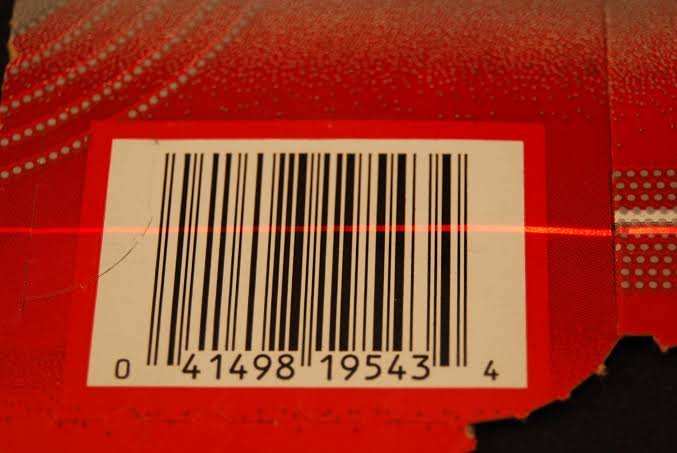
The papers are as follows: barcode are found in more than a billion products and are scanned billions of times each day around the world.
- Engineer Masahiro Hara, inspired by the desktop Go, created the QR code to solve the problem of multiple barcodes. His company, Denso, patented the technology but made it available free of charge for public use.
- Barcode was established as an industry standard in 1974, creating a strong monopoly. The GS1 organization undertook the issuance of the codes, dominating the retail trade for almost fifty years in over a billion products.
- The GS1 organization announced the replacement of the barcode by the QR code by 2027. The transition, known as Sunrise 2027, allows for the integration of more information about the origin, ingredients, and safety of products.
- The transition requires significant changes in business systems and creates challenges. Delayed companies risk being left out of the market, while consumers will have access to more targeted information.
The barcodes that are on almost every product we buy are heading towards the end of their season. Not because they failed, but because the technology he has now found a way to fit much more information into a small square code: the QR code.
ARTICLE CONTINUES AFTER ADVERTISEMENT
The story begins in 1992, in a factory of Denso, a Toyota subsidiary in Japan. The workers were drowning in barcodes. Some parts of the production line carried up to ten different barcodes in order to record all their tracking data. Employees scanned them one by one, hundreds of times a day.
Engineer Masahiro Hara, a member of the barcode team, was looking for a solution. His thought was simple: if he could create a two-dimensional code instead of a one-dimensional one, he could store much more information and limit the ten scans to one.
Inspiration came from an unexpected place
Inspiration came from an unexpected place. In the company's canteen, Hara watched his colleagues play Go, the board game of black and white pawns on a grid. The contrast between black and white squares helped him design what would become the QR code. A code that could be read from any angle and store up to 200 times more data than the barcodes used in the products.
ARTICLE CONTINUES AFTER ADVERTISEMENT
After a year and a half of work, Denso patented the technology. But instead of demanding usage rights, it published the specifications, allowing any company to use it for free. This decision is currently behind a change that is expected to affect almost every product we buy.
To understand the magnitude of the change, one must go back to 1974. Then, at a supermarket in Troy, Ohio, a cashier scanned the world's first barcode, printed on a pack of Wrigley's Juicy Fruit chewing gum.
Retailers and manufacturers had previously set up a committee and opted for Universal Product Code, the UPC, as the single industry standard. This choice created a powerful 'network effect': the more stores required UPCs in products, the more manufacturers were required to use them. And the more products they brought UPC, the more merchants needed scanners.
The system reached a critical crossroads by 1980 and evolved into a self-sustaining monopoly. The Uniform Code Council, now called GS1, gained the authority to issue the first six digits of each barcode, the so-called company prefixes. For the products sold in the organized retail there is virtually no alternative register.
ARTICLE CONTINUES AFTER ADVERTISEMENT
The revolution on the shelf
Today GS1 charges annual licensing fees for company prefixes, depending on the size of the company. Barcodes have dominated retail for almost half a century, are found in more than a billion products and are scanned billions of times each day around the world.
Two years ago, however, GS1 announced that the barcode would begin to give way to the QR code. The change called Sunrise 2027 marks a global transition as retailers begin to adopt two-dimensional codes.
The reason has to do with the limited space on the packaging. A product must today be advertised, meet legal requirements, explain its use, and provide information on its origin, ingredients, authenticity, and disposal. “This is one of my biggest battles,” says Nicole Light, founder and CEO of Power in Packaging, who has worked on packaging from perfume and drinks to meat, seafood and nail polish.
ARTICLE CONTINUES AFTER ADVERTISEMENT
These needs became even more acute after food recalls in the early 2020s. The problem is that a traditional barcode can show what a product is, but not where it comes from. Following onion recalls in 2020 and 2021 and the peanut butter incident in 2022, the FDA required manufacturers to more closely monitor products in the supply chain.
QR can link the product to information about its origin and authenticity, ingredients and allergens, expiration date, environmental footprint, and care and disposal. The same code can be used at the checkout, in the warehouse and by the consumer.
“This is no longer a futuristic experiment,” says Kate Hardcastle, a business strategist and author of The Science of Shopping. According to a survey he has conducted with GS1, nearly half of retailers have already started to incorporate QR capabilities. “The shopping infrastructure is already being rewritten.”
ARTICLE CONTINUES AFTER ADVERTISEMENT
Transition is not that simple
For businesses, however, the transition is not as simple as printing a square on a package. They need to change the systems that communicate with the codes, the way the data is stored and the labels of the products. Unilever, for example, last year carried out a massive product upgrade to brands such as Dove, Vaseline, and Hellmann's, involving 45,000 different product codes.
Change is not mandatory or imposed by any government. But as Walmart, Costco, Target, and other big retailers change their scanners and databases, latecomers risk falling behind, even off-the-shelf.
And there's an additional problem: until the transition is complete, GS1 requires products to carry both codes, up to 50mm apart. “Printing a new square on a box is the easy part,” Hardcastle says. The hard part is that the new code is a link and links need infrastructure. The information must be correct, up-to-date and available.
ARTICLE CONTINUES AFTER ADVERTISEMENT
For consumers, the change can mean much more information, without necessarily more text on the packaging. Research by Hardcastle and GS1 showed that 79% of consumers prefer QR codes. This does not mean that it will scan every package in the supermarket stroller. It means that he wants the right information available when he needs it, from recipes to information on the origin of a product.
“They don't necessarily want more information,” Hardcastle says. 'They want the right information.'
And as 2027 approaches, many questions remain unanswered. Who will check that each QR code is working? Should designers scan each code separately to see that the link and corresponding page are working? Will there be a number for each code to make it easier to track inventories and databases?
“People don't love change, and they don't love change that's going to cost money,” Light says. 'It's like a meteor falling on the planet and no one notices.'
ARTICLE CONTINUES AFTER ADVERTISEMENT
Reference: galaksias.gr
Machine translation
Comments